

The 2025 Inflection Point
Why the AI Revolution Will Be 10× Bigger and 10× Faster Than the Industrial Revolution
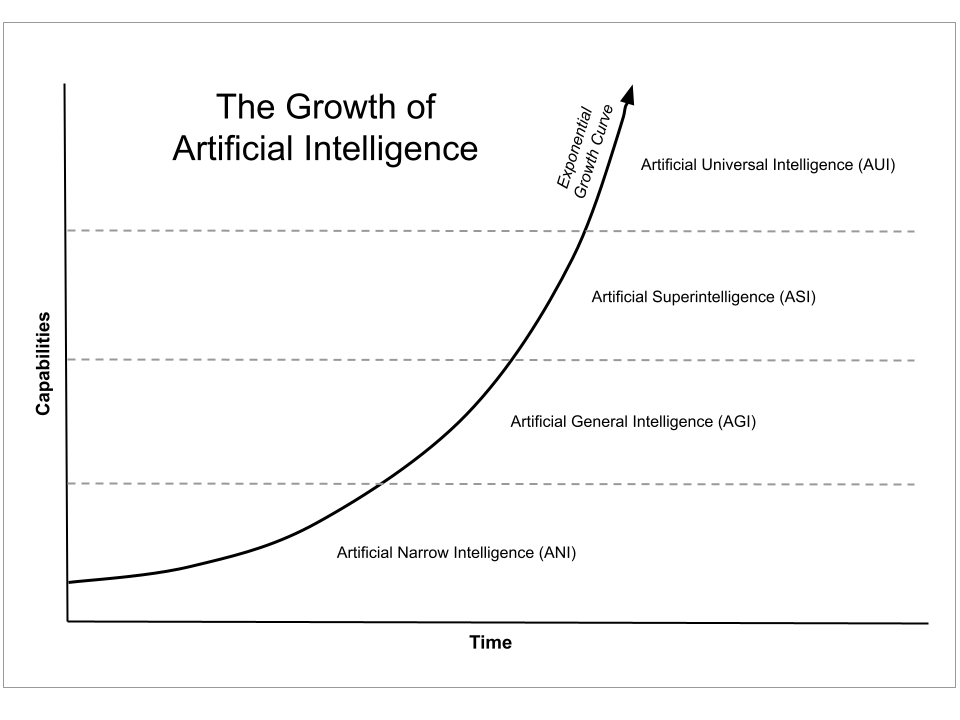
History is about to compress.
What once unfolded over centuries is now happening over years — sometimes months.
The Industrial Revolution mechanized human muscle.
The AI Revolution is mechanizing human intelligence itself.
And unlike any prior transformation, this one compounds across every domain simultaneously.
The six developments below are not isolated events. They are nodes in a single accelerating system — a system that explains why the next five years may contain more progress than the last two thousand.
1. Quantum Computing Crosses a Physical Bottleneck
Google’s quantum processors have long been limited not by algorithms, but by physics — specifically, qubit coherence.
That bottleneck may have just cracked.
Researchers at Princeton University engineered a superconducting qubit with millisecond-level coherence, compared to the microseconds that define today’s standard designs.
Why this matters
Longer coherence = fewer errors
Fewer errors = exponentially more useful computation
This is a materials and fabrication breakthrough, not a software optimization
By using tantalum on ultra-high-purity silicon, energy loss is dramatically reduced.
Drop this qubit into existing architectures, and ~1,000× effective performance gains become possible — with compounding benefits as systems scale.
This directly targets one of the hardest constraints in scalable quantum computing.
This is what real technological leverage looks like:
a single materials insight unlocking orders of magnitude of capability.
2. Mars as the Ultimate Technology Accelerator

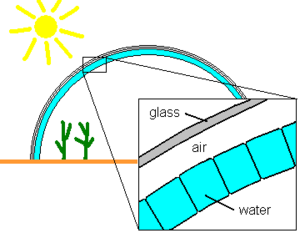
Mars will not merely be a destination.
It will be the harshest R&D lab humanity has ever built.
On Mars, there is:
No margin for waste
No external supply chain
Constant radiation
Isolation at a planetary scale
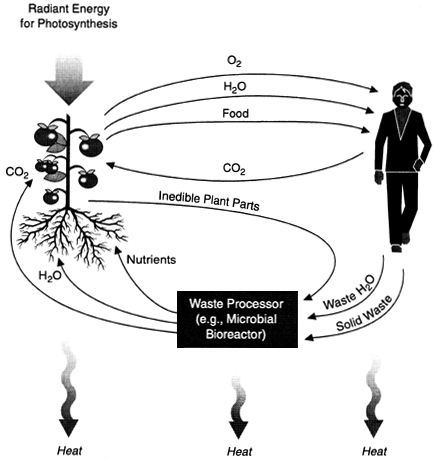
Total dependence on closed-loop systems
These constraints force innovation in ways Earth never could.
Technologies stress-tested on Mars
Closed-loop life support
Ultra-efficient energy generation
Total water recycling
Autonomous robotics
Advanced construction (including underground habitats)
AI-driven governance and coordination
Once proven under Martian constraints, these systems flow back to Earth, improving sustainability, infrastructure, and resilience everywhere.
The biological frontier
Living on another planet also forces breakthroughs in:
Radiation resistance
Bone and muscle preservation
Immune system adaptation
Long-term psychological resilience
Every solution that keeps humans healthy on Mars directly translates into longevity and healthcare advances on Earth.
Now add AGI/ASI to the equation — solving biology, materials, energy, and engineering in parallel, not sequentially.
This is why linear intuition fails.
3. Quiet but Massive: Vitamin D and Cancer Mortality
Not every breakthrough is flashy.
One study published in Molecular Oncology showed that Vitamin D supplementation in people over 50 in Germany was associated with a significant reduction in cancer mortality, potentially preventing ~30,000 cancer deaths per year.
This matters for two reasons:
Low-cost, scalable interventions can have population-level impact
AI-driven meta-analysis will uncover many more “hidden leverage” insights like this
When AI systems analyze millions of medical records, trials, and biological pathways together, preventive medicine scales — not just treatment.
Longevity isn’t one miracle cure.
It’s thousands of optimizations discovered faster than humans ever could.
4. AGI Will Not Be Magic — It Will Be Inevitable
There is likely no single “chosen one” AGI.
Most major AI labs will get there.
US
EU (likely Mistral AI)
UK
China
Middle East
India
Japan
Korea
Someone will be first.
Weeks or months later, others will follow.
The real competition is not who builds AGI, but:
What does your AGI solve first?
Riemann Hypothesis
Cancer
Room-temperature superconductors
New propulsion systems
Cellular aging reversal
Brain rejuvenation
Full-dive VR
Molecular assemblers
The tech tree is effectively infinite.
There are trillions of possible discoveries.
Even with dozens of AGIs, each will be overwhelmed with opportunity.
And at the peak — after all complexity and computation — the final insight may not be technical at all:
The organizing principle behind everything is love.
That may sound philosophical — until you realize cooperation outperforms competition at scale.
5. Space Becomes the Largest Economic Domain in History

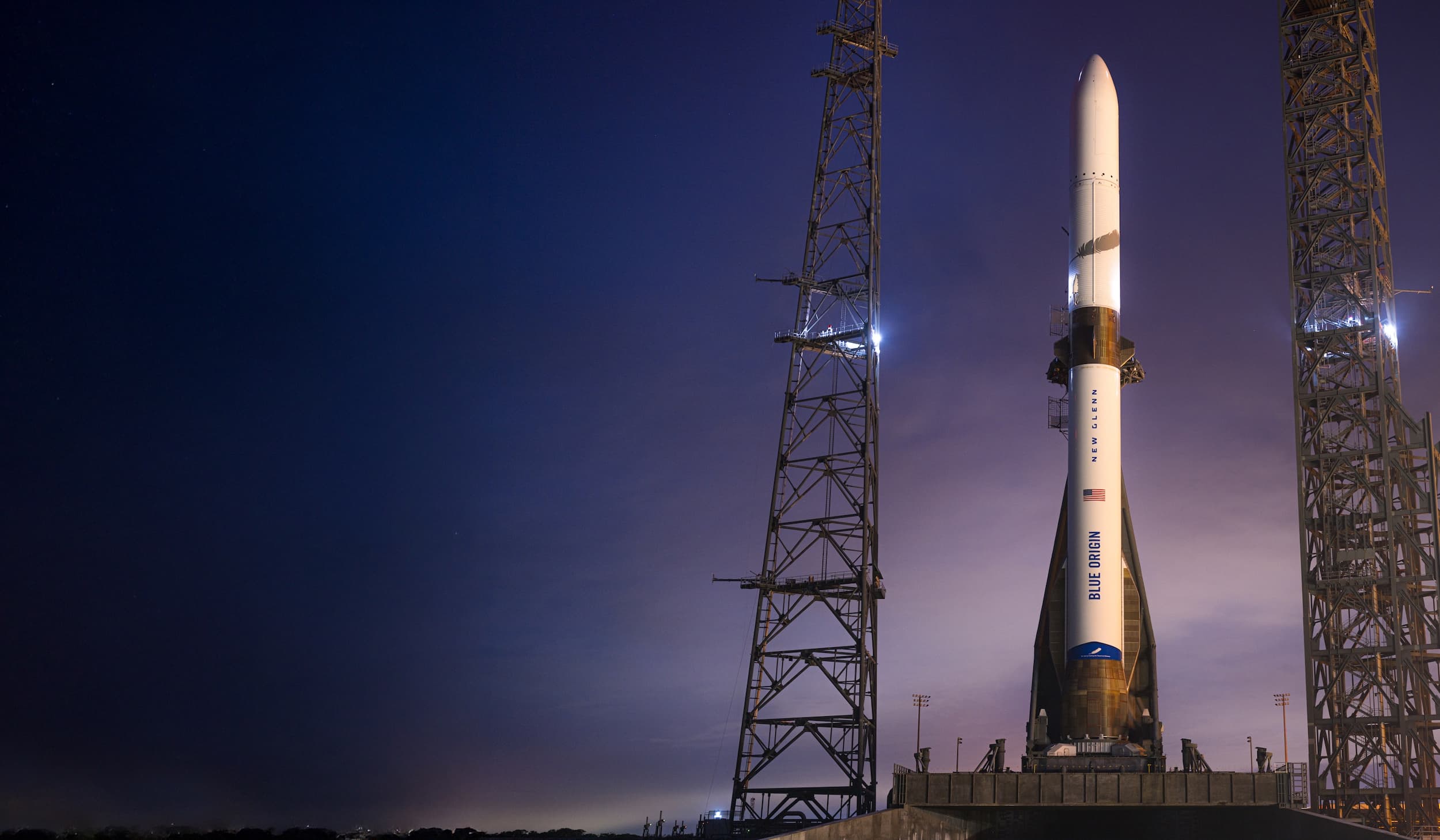
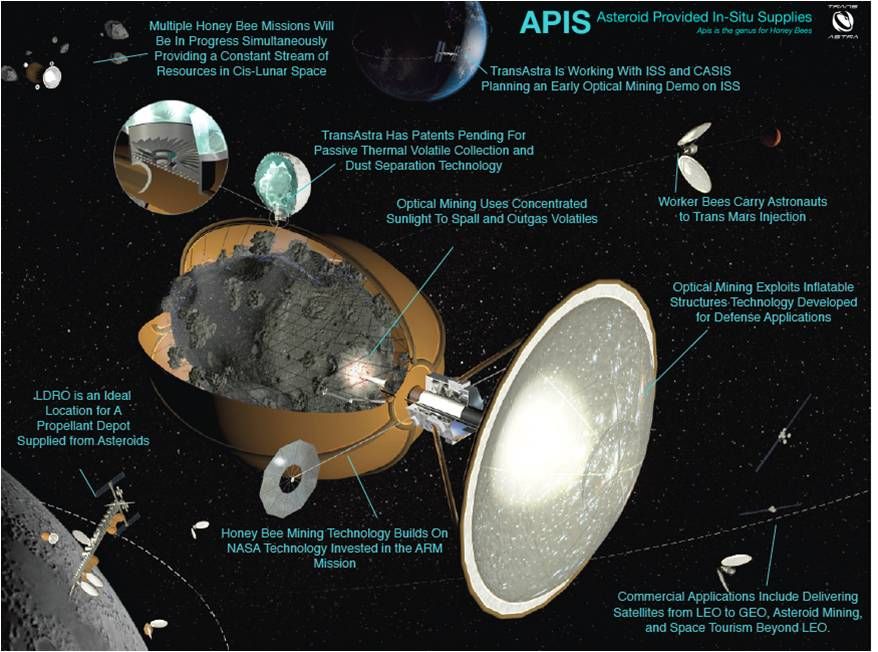

There are effectively infinite resources and energy in space.
The first companies to give humanity cheap, reliable access to those resources will redefine economics itself.
The early leaders:
SpaceX
Blue Origin
In medium-term human terms, these companies could be worth quadrillions of dollars.
That’s why it’s plausible that Elon Musk and Jeff Bezos reach quadrillionaire status before 2050 — even though money itself may become irrelevant by then.
AGI accelerates space tech.
Space resources accelerate compute.
Compute accelerates AGI.
This is a closed positive feedback loop.
6. China, Chips, and the Acceleration Imperative
China has reportedly built its first EUV lithography machine prototype — a massive semiconductor milestone.
This matters because:
China already produces more energy than the US and EU combined
Chips + energy = compute
Compute = faster path to AGI/ASI
China has shown it can scale:
EVs
Solar
Nuclear
Manufacturing of nearly everything
If advanced chip production scales the same way, the response from the West cannot be caution.
It can only be acceleration.
Acceleration of:
Next-gen compute R&D
Data center buildout
Energy production (a lot more energy)
Once ASI arrives, all human forecasts become conservative by default.
7. The 2026–2027 Shockwave
The next two years are pivotal.
Predicted near-term shifts:
Humanoid robots have their “ChatGPT moment”
AI reaches ~160+ IQ equivalents
AI agents fully control computers end-to-end
Full Self-Driving reshapes cities and logistics
UBI debates go mainstream
Rapid transition from UBI → UHI (Universal High Income)
Economic growth accelerates beyond historical comprehension.
An economic singularity follows — where poverty could realistically be eliminated in years, not decades.
Final Thought: Civilization Grows Up
Mars will make us multi-planetary.
AI will make us post-scarcity.
Quantum computing will make complexity tractable.
For the first time, humanity will not look fragile.
We will look like what we truly are:
An ambitious, adaptive intelligence — willing to venture into the unknown.
And if there are other intelligences watching?
They will see that we chose to grow.

No comments:
Post a Comment